a portfolio driven by curiosity
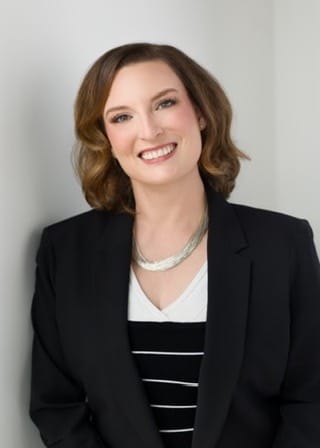
Nicole Eisdorfer treats ideas as her playground, tries to learn at least one new thing every day, and thoroughly believes we accept far too many dysfunctional things at work as “just business.”
She has spent the better part of two decades inside HR and people-systems work, which is either very brave or a cry for help depending on your perspective. She worked in leadership development, employee relations, HR operations, organizational culture, people analytics and systems design — which means most of her career has been spent in the exact places where what organizations say they believe and what their systems actually produce either connect, or they don’t. Mostly they don’t. She sat in a genuinely unreasonable number of meetings where the slide said “people are our greatest asset” and the budget said something entirely different. At some point she stopped assuming the gap was a coincidence, and started digging into why the gap exists, what the gap does to the people who have to work with it every day, and how that gap gets in the way of organizational success.
She was the first person on her father’s side, and the first woman on her mother’s side, to graduate from high school. Her childhood was poor in the specific way where “what’s for dinner” was sometimes a real mystery, and her parents had to juggle which utility bill to pay. From age five to fifteen her family moved every single year, usually to a different town, which made her an expert new kid. She is painfully aware that her trajectory could have been different, and that luck played as much of a role as anything else.
Nicole is a carrier of a rare genetic disorder, fragile X syndrome, which affects her oldest son, Elijah, along with autism. His anxiety and developmental disability reshaped her understanding of how the brain works, how behavior is often driven by biology, and how systems must accommodate that biology rather than punish it. Trying to help him get through school made one thing obvious: the system wasn’t just hard for him, it was suboptimal for almost everyone. It was loud, rigid, evaluative and intolerant of difference. It demands adaptation, then we call that adaptation success. After the IEP meetings, she couldn’t stop seeing the same thing at work.
September 25 is the anniversary of two phone calls that shifted the universe under her feet. The first was the genetic specialist, with the test results that explained Elijah’s development. The second was a biopsy that came back positive for cancer. Both times her insurance covered everything, and she knows how lucky that was. She still thinks about how scary it is that healthcare, the fundamental ability to take care of your family and yourself, is so intrinsically tied to what kind of insurance your employer offers. Or whether you even have an employer.
Her father-in-law was forever talking about history at the dinner table, mostly the history of medicine. His favorite stretch was just before germ theory, when doctors had data (cholera clustering in certain places, death rates changing when people washed their hands) and no theory that could explain it. He loved those messy edges at the end of a paradigm.
He also talked about belief versus wonder.
“If you believe that senility is inevitable to aging, you take no action. On the other hand, if you wonder whether it is you begin to ask questions, you discover a disease called Alzheimer’s Disease and then you do research to cure the disease.”
Wonder is the twin of uncertainty and for too long we have let our fear of uncertainty turn us away from wonder.
Nicole keeps coming back to that distinction in her own work. If misery is an inevitable part of working, the question is how to endure it. If we wonder how much of that misery could be prevented, we have something to investigate. Her entire portfolio is organized around investigating and answering that question from every angle she can find.
Nicole was identified as gifted in elementary school in the 1980s and, like many gifted females in the 1980s, was then diagnosed with ADHD several decades later than would have been helpful. Her educational path is best described as a social sciences major who wandered into the commercial arts, detoured through natural sciences, and fell back into social sciences, landing on organizational behavior and communications because that was where her scattered credits added up to most of a major. That major gave her words for the things that had never made sense to her at work, and a newly formed, insatiable curiosity about why so much research shows an ideal way to work while so few companies do it. The curiosity turned into a decade-long obsession with understanding how work works.
None of it was planned. Each piece built on the one before, and she threw herself into every one. She is more Cheshire Cat than Alice…always comfortable knowing that any road gets you somewhere, and that somewhere tends to be interesting. At some point Nicole stopped apologizing for the scenic route and started noticing that the route had taken her somewhere nobody else seemed to have been.
Wandering along that route, she became what she now calls an HR philosopher. She connects HR to fields that don’t feel obvious but add new perspectives and metaphors. Those fields allow new ways to debate what we are all even doing. She finds the questions nobody thought to ask, and sees what happens.
She is writing The Default Directive, operates Truer Words LLC, and teaches people to see the work they can do between paradigms.
Her writing is a wild ride. One week it’s burnout prevention and leadership trust, and the next it’s Sim City, an obscure study on habit formation, or an entire article written so she could include song lyrics. Nicole overuses ellipses and parentheses, fiercely defends the em dash and the oxford comma (except when she forgets them), and collects frameworks the way other people collect LEGO sets… except that her brain keeps dumping out the box and rebuilding the instructions.
The giraffe is her spirit animal. Giraffes defy logic and expectation. They live in a world that doesn’t seem built for them and navigate it anyway, from a height few others see from. They don’t shrink to fit. They stretch toward what they need, which is what Nicole has spent her life doing. By the odds, she wasn’t supposed to be here, but here she is. And because she is, she will always reach back with a helping hand, because others aren’t “supposed” to be here either, but they could be. And when they are, they’ll contribute in ways that are amazing, unexpected, and exactly what the world needs.